
Curtain runners are the moving parts that make your curtains glide smoothly. Choose the wrong material, and you’ll deal with stuck curtains, broken hooks, and frustrated customers. This guide breaks down what actually matters when sourcing wholesale curtain runners.
What Are Curtain Runners?
A curtain runner has three basic parts:
- The glider – slides along the track
- The track channel – where the runner travels
- The hook – connects to your curtain
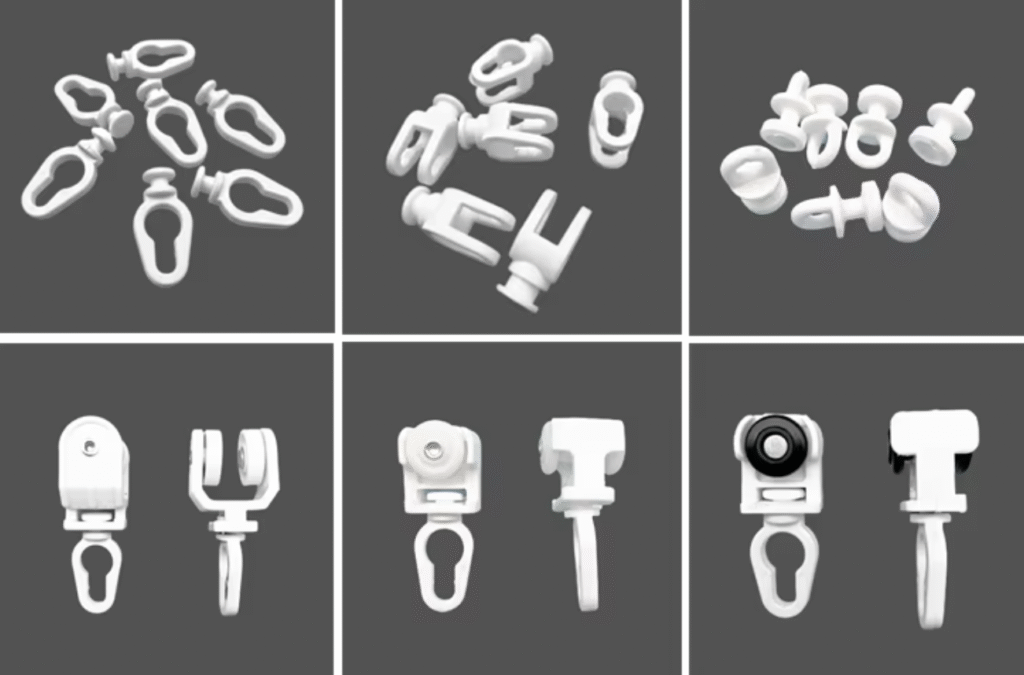
The material you choose affects how smoothly it operates, how long it lasts, and what weight it can handle.
Material Comparison
Plastic/Nylon Runners
Good for:
- Light to medium curtains (under 15 lbs per foot)
- Bathrooms and kitchens (won’t rust)
- Budget projects
- Quiet operation
Watch out for:
- Wears down with heavy use
- Breaks under heavy weight
- Can become brittle in direct sunlight
Price range: $0.10-0.30 per piece when buying bulk from China
Aluminum Runners
Good for:
- Medium to heavy curtains
- Modern commercial spaces
- Long-term installations
- Coastal or humid areas
Watch out for:
- Costs 2-3x more than plastic
- May oxidize in extreme coastal environments
Price range: $0.40-0.80 per piece wholesale
Steel Heavy Duty Runners
Good for:
- Extra heavy curtains (up to 125 lbs per linear foot)
- Hotels, theaters, event venues
- Motorized curtain systems
- High-traffic areas with frequent use
Watch out for:
- Will rust without proper coating
- Heavier, needs stronger mounting
- Most expensive option
Price range: $2.50-5.00+ per piece
Ball-Bearing & Composite Runners
Good for:
- Bedrooms and quiet spaces
- Frequent daily use
- Premium residential projects
Watch out for:
- Mid-range pricing
- May soften in high heat
- Needs specific track types
Price range: $1.00-2.50 per piece
How to Choose
Match Material to Curtain Weight
| Curtain Type | Best Runner Material |
|---|---|
| Sheer, voile | Plastic/nylon |
| Cotton, linen | Aluminum or reinforced plastic |
| Velvet, blackout | Heavy duty steel or ball-bearing aluminum |
| Commercial drapery | Steel with ball bearings |
Consider Usage Frequency
- Occasional use → Standard plastic works fine
- Daily opening/closing → Go with nylon or aluminum
- Multiple times daily → Heavy duty with rollers or ball bearings
- Motorized systems → Precision metal runners only
Check Your Environment
- Humid spaces → Aluminum or plastic (no rust)
- Direct sunlight → Anodized aluminum or UV-stabilized nylon
- Indoor, dry → Any material works, even steel with coating
- Coastal areas → Stick with plastic or high-grade aluminum
Budget Reality Check
Don’t just look at unit price. Calculate total cost:
- Plastic runners may be cheap but need replacing sooner
- Aluminum costs more upfront but lasts 10+ years
- Heavy duty steel pays off in commercial settings with constant use
Sourcing from China
What to Look For
Quality indicators:
- ISO-certified factories
- Manufacturers specializing in curtain hardware (not general plastics)
- Material certifications for nylon grades and aluminum alloys
Typical minimum orders:
- Plastic runners: 1,000-5,000 pieces
- Aluminum runners: 500-2,000 pieces
- Heavy duty runners: 200-1,000 pieces
Request Samples First
Before placing bulk orders:
- Test for smooth gliding
- Verify weight capacity claims
- Check wheel rotation (for roller types)
- Ensure hooks are securely attached
خيارات التخصيص
Most Chinese manufacturers offer:
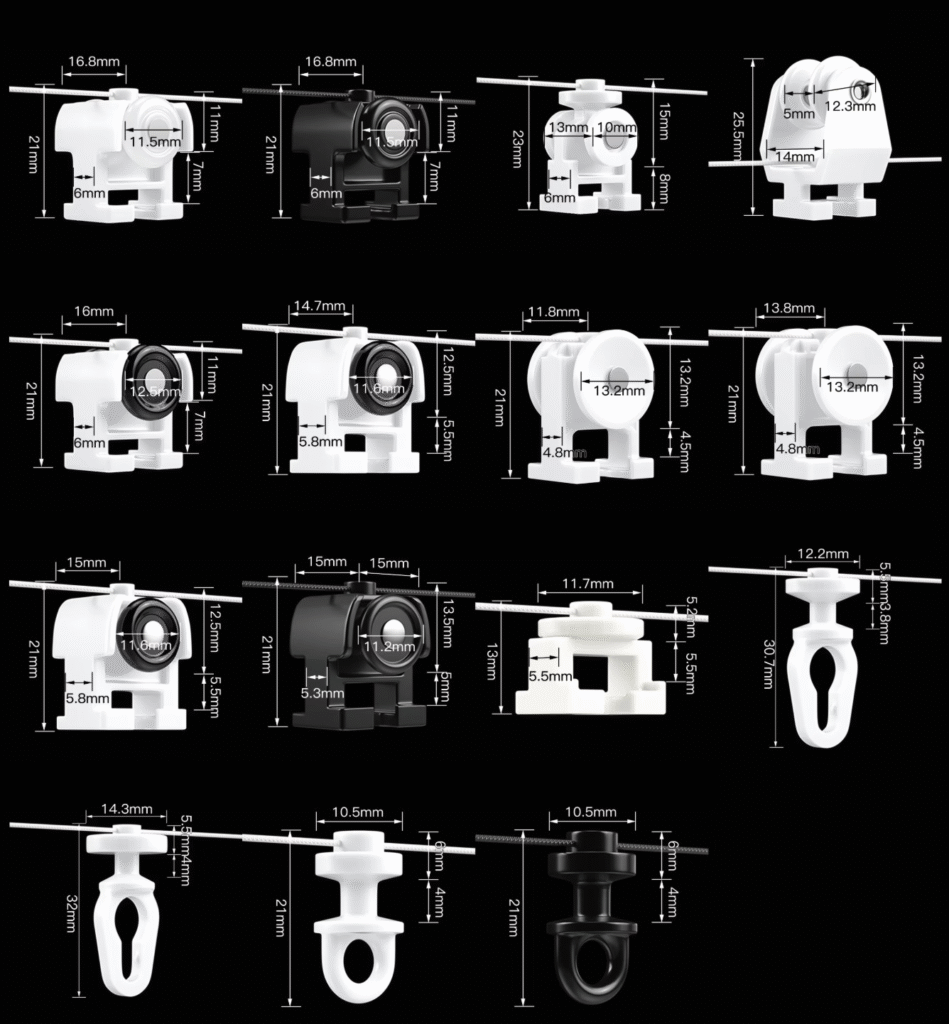
- Custom dimensions for your track system
- Private labeling and packaging
- Color matching (RAL or Pantone)
- Modified hook designs
Maintenance
Keep them running smooth:
Monthly:
- Wipe tracks with dry cloth
- Check for cracks or wear
- Apply silicone spray to metal runners (never oil)
Yearly:
- Deep clean all runners and tracks
- Replace worn runners before they damage curtains
- Tighten mounting screws
Replace when:
- Visible cracks appear
- Movement becomes rough or catches
- Hooks break or bend
- Noise increases despite cleaning
Common Problems & Fixes
Runners sticking? Clean the track thoroughly and check for debris. Make sure runner size matches your track.
Too noisy? Switch to nylon or silent runners. Apply proper lubricant. Check if track sections are misaligned.
Curtains won’t stay closed? Add more runners to distribute weight better. You might need to upgrade to heavier-duty runners.
Breaking frequently? Your curtains are probably too heavy for that runner type. Upgrade the material grade.
Bottom Line
For residential projects with light curtains, quality nylon runners offer the best value. For commercial applications or heavy drapes, invest in ball-bearing steel or premium aluminum runners.
When buying from China, prioritize quality over rock-bottom prices. A slightly more expensive runner that lasts five years beats a cheap one that fails in six months.
The right runner choice balances upfront cost, durability, and performance. Chinese manufacturers offer competitive wholesale pricing with good quality—just make sure to verify certifications and test samples before committing to large orders.
I’m a curtain runner manufacturer from China. We rank in the top 1% for manufacturing quality. As a curtain accessory supplier, I’ve been running this business for over 20 years. Whether you’re looking to buy curtain runners from China, need aluminum curtain runners wholesale, or want to source heavy duty curtain runners, we deliver quality and reliability.
 Arabic
  English
  Russian
  French
  Esperanto