

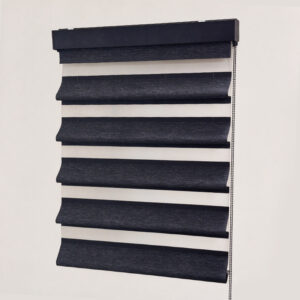
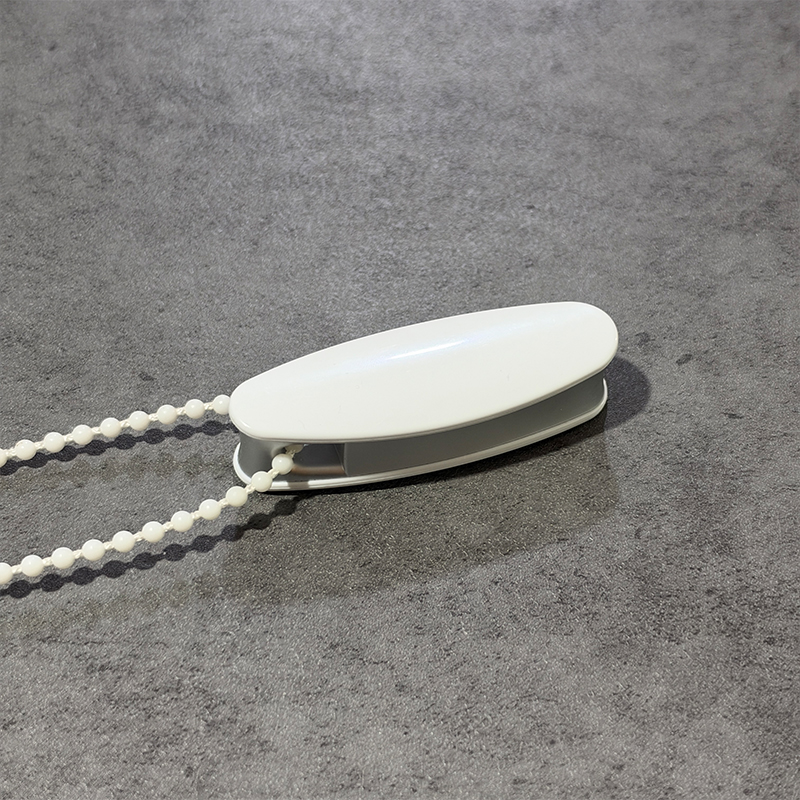
A blind chain tensioner is the small fitting at the bottom of the chain loop that holds the two strands together and keeps them tight against the window frame. Without one the loop hangs free: it swings when the blind is raised, it slaps the glass in a draught, and the pull comes up at an angle instead of running straight down into the chain wheel.
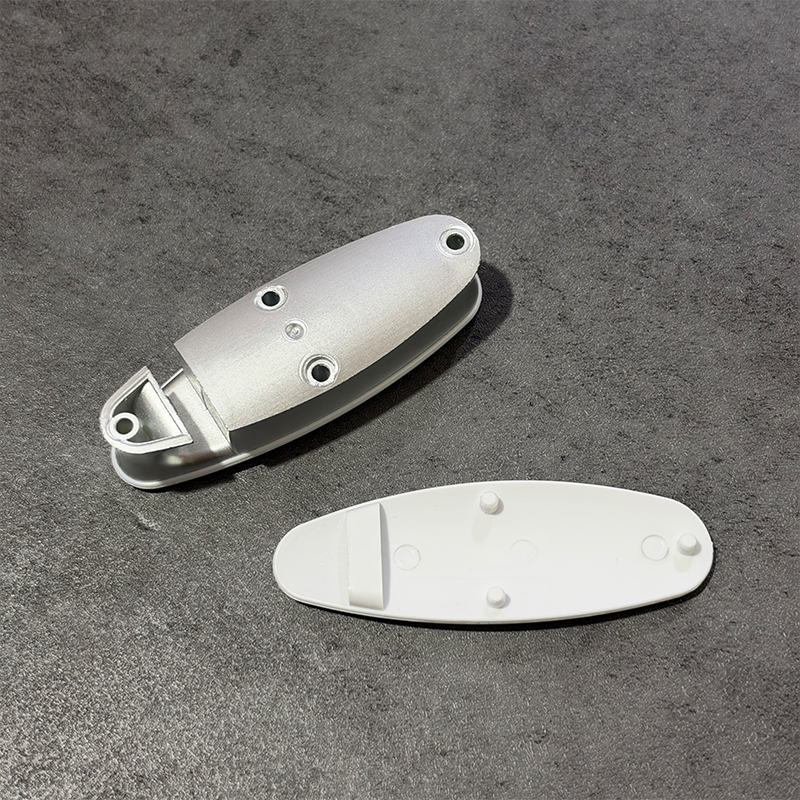
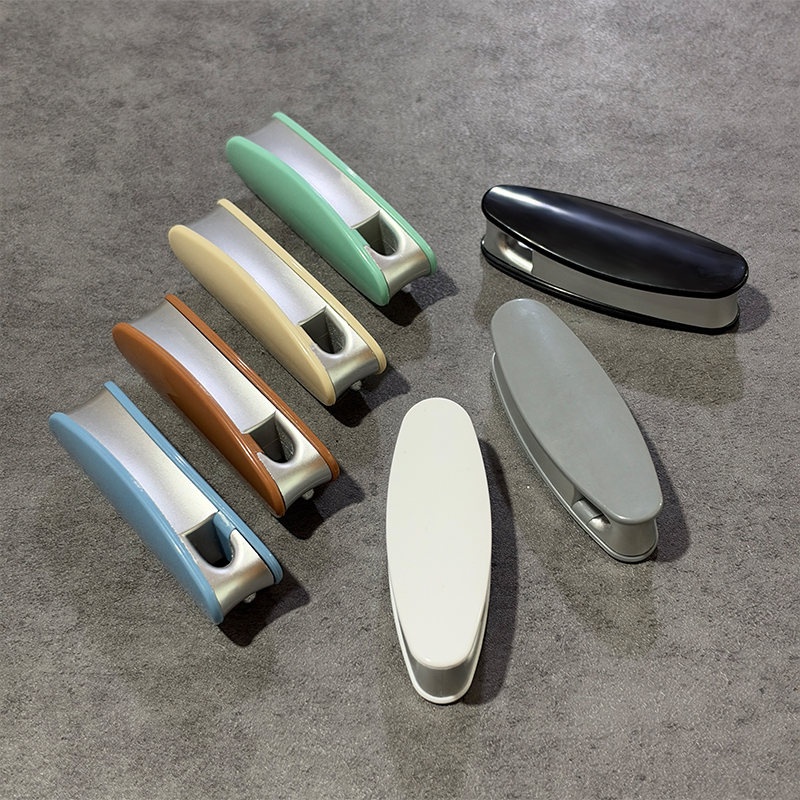
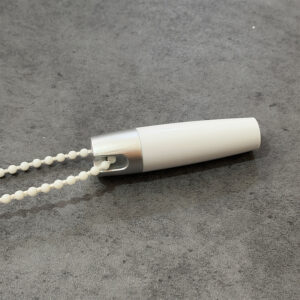
This one is an oval shell on a metal base plate, with the loop passing through the aperture at the narrow end. It suits the loop that drives a roller blind, a zebra blind, a vertical blind or a roman — any blind where a bead chain or a cord loop turns the mechanism.
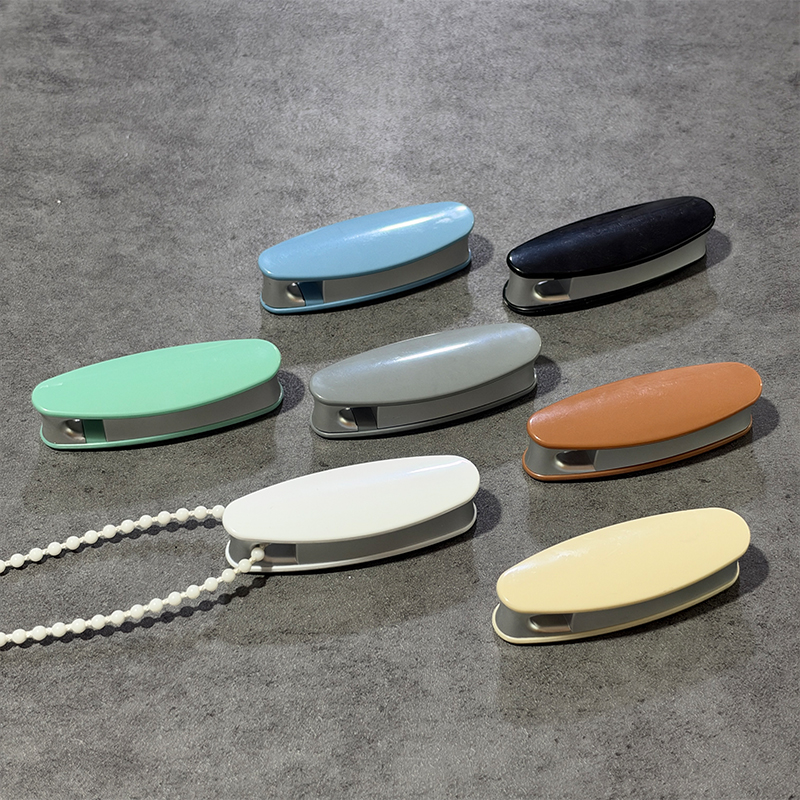
R&C supplies the blind chain tensioner in the colour range in the photograph, as a spare by the piece and in bulk for fit-outs, alongside the roller blinds and zebra blinds it is used on.
What the tensioner actually does
Two jobs, and the second one is the one that gets forgotten.
The first is mechanical. It holds the loop taut so the chain sits down in the grooves of the chain wheel instead of riding up on the shoulders. A slack loop lets the chain climb a tooth, and once it has climbed the blind stops at the wrong height or the chain walks off the wheel altogether.
The second is safety. A loose chain loop is the part of a blind that a small child can reach, and keeping that loop short and tight against the frame — or letting it break apart under load — is what blind safety rules ask for. In Europe, EN 13120 treats a tension device as one of the two accepted ways to deal with a loop. That is why the same fitting is sometimes sold as a child safety device rather than as an accessory: same part, different shelf.
Why the loop has to be anchored, not just clipped
A blind chain tensioner is not a chain stop. A stop fixes one point on the chain so the blind cannot be over-raised; a tensioner holds the whole lower loop under light spring pressure against the wall or the frame.
The difference shows up in service. A stop leaves the lower loop as free as it was — the chain still swings, still slaps, still comes into the wheel at an angle. A tensioner takes the slack out of the entire lower run, which is why the pull feels even from the first turn and why the chain stays quiet on a window that is opened every morning.
Because the pressure is sprung rather than fixed, the loop can still be pulled through if someone yanks it. That is deliberate. A rigid clamp would either break the chain or tear the fixing out of the frame.
Fitting it
The blind chain tensioner goes at the bottom of the loop, on the frame or on the wall, either directly under the chain wheel or offset to clear the sill, depending on how the blind is hung.
Three things have to line up:
- both strands of the loop pass through the aperture, so the shell never sits on a single strand
- the body sits flat on the mounting face, so the spring presses evenly along the loop
- the fixing point is reachable with the blind already in place, or the tensioner goes on before the blind is hung
The base plate carries the fixing, and the plate is what takes the load — not the shell. On a frame with a deep rebate the tensioner usually sits on the frame face beside the glass; on a wall-mounted roller it sits on the wall under the bracket. Either way the loop ends up in the same relationship to the wheel: short, straight, and under light tension.
Which blinds it suits
Any blind driven by a bead chain or a cord loop: roller blinds including no drill types, zebra blinds and other day and night blinds, vertical blinds, and roman or pleated blinds where a loop turns the mechanism.
It does not suit a blind with no loop at all. A spring-loaded cordless roller such as the no drill roller blinds has nothing for a tensioner to hold, a motorised blind is driven at the headrail, and a wand-tilted vertical blind has a wand instead of a chain. In those cases the loop problem does not exist, so there is nothing to fit.
Matching the colour
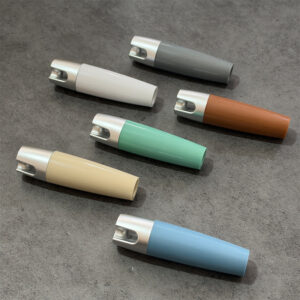
Blind hardware is the part of the window people actually see, and a white tensioner on a black chain reads as a mistake. The range in the photograph runs from white and cream through grey and black to mint, sky blue and tan, so the fitting can be matched to the cap and the bracket already on the blind instead of being hidden behind a curtain.
On a fit-out this matters more than it sounds. One colour across a whole building keeps the spare parts list short, and a matched tensioner means the maintenance team does not have to explain why one window looks different from the rest.
What to check before ordering
Two things decide whether a blind chain tensioner works, and neither is visible from a product photo.
The loop itself. A bead chain and a cord loop do not seat the same way: a chain seats between beads, a cord seats on the cord. Housings exist that take both, but not every seller’s does, so the safe move is a photo of the loop next to a rule before the order goes in.
The shape of the run. A continuous loop that returns to the same wheel is the normal case; two separate cords on an older blind are not, and a fitting sold for a continuous loop will not hold them as a pair.
Get those two confirmed and the rest is colour and quantity. Get them wrong and the tensioner arrives, fits nothing, and comes back — which on a part this size costs more in handling than the part is worth.
What these are not
Not a chain connector: a connector joins two chain ends into a loop, a tensioner holds that loop tight once it is already joined. Not a chain stop, for the reason above. And not a repair for a blind whose chain wheel is worn — if the chain is climbing because the wheel grooves are gone, a blind chain tensioner will hold the loop and the blind will still jam, and the wheel is the part that needs changing.
For the tracks and runners that go with the same range, see curtain rod and track accessories. For volume pricing, colours held in stock and samples, send the loop photo through the inquiry form.







 Arabic
 English
 Russian
 French
 Esperanto
المراجعات
لا توجد مراجعات بعد.