

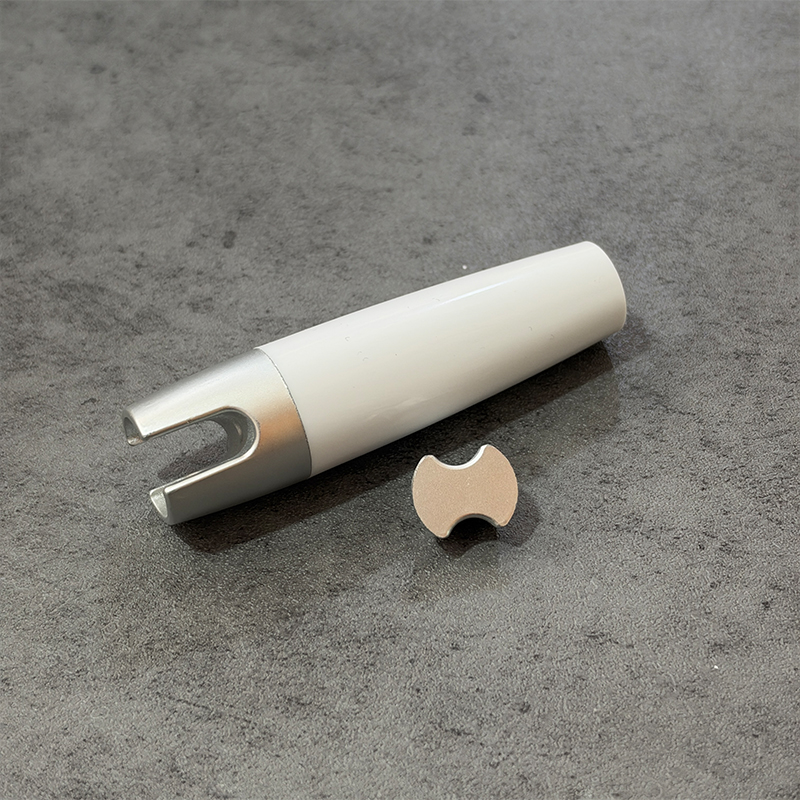
A blind chain weight is the part that hangs at the bottom of the control chain loop and holds the two strands together. On a vertical blind it is what stops the loop swinging into the vanes every time the window is opened. On a roller blind it is what stops the chain riding up and walking off the sprocket.
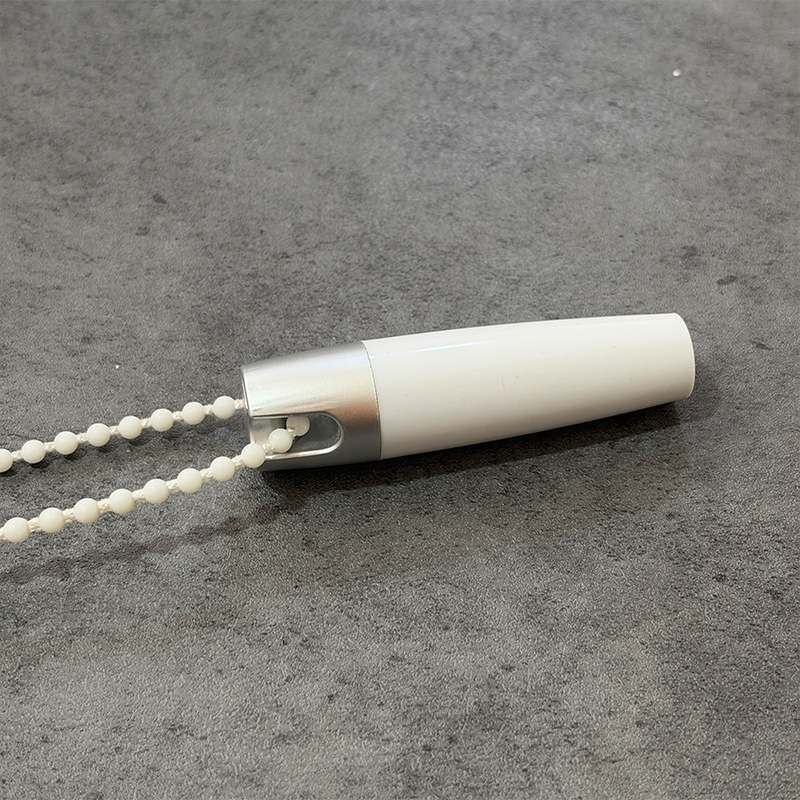
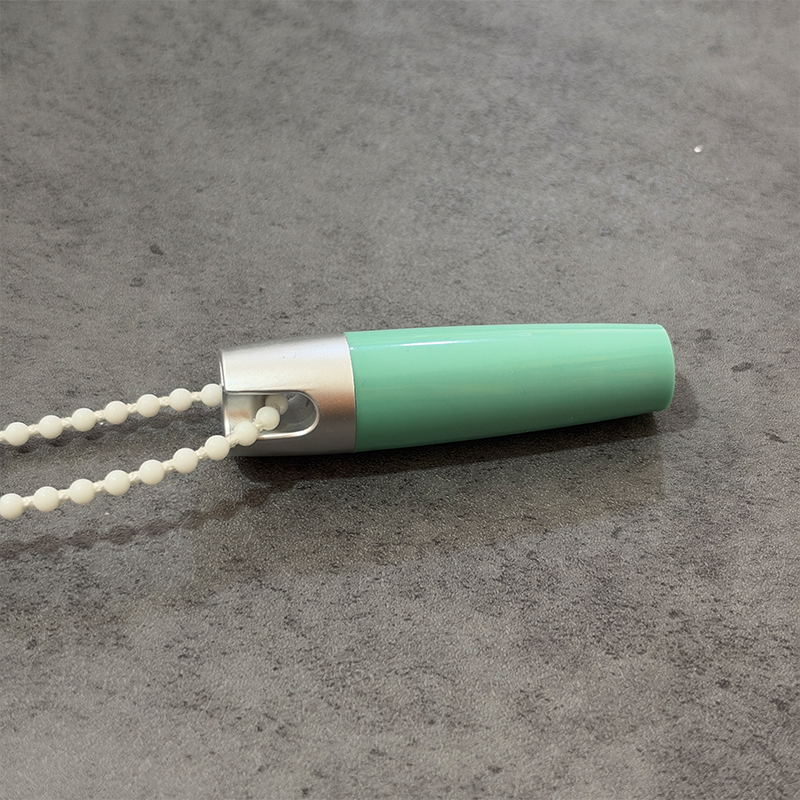
This one is a moulded tapered body with a brushed metal clip at the wide end. The chain loop passes through the clip, the body hangs below it, and the two strands leave the weight at a fixed spacing instead of crossing over each other.
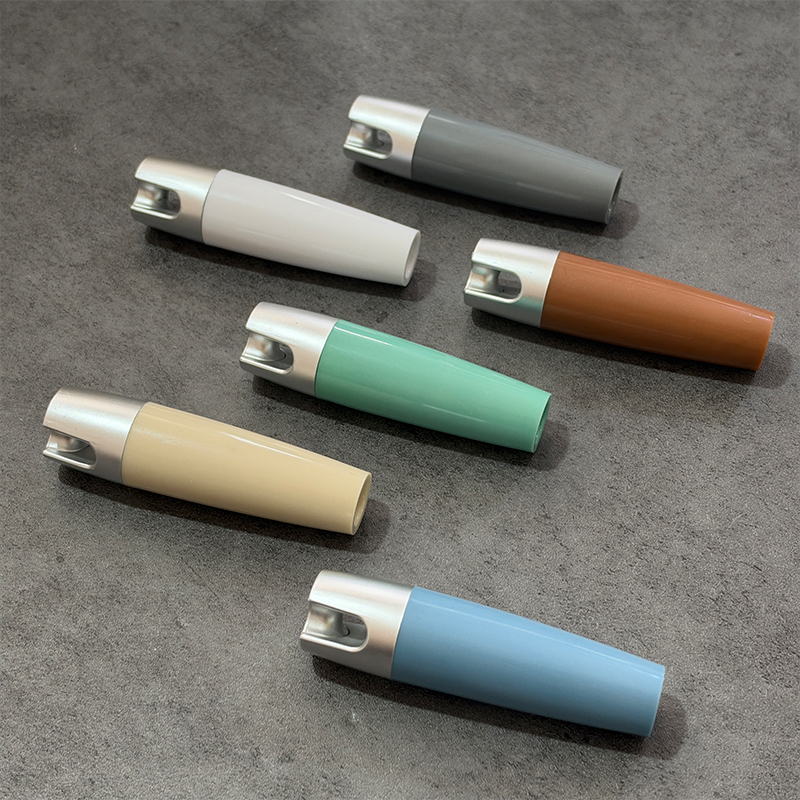
R&C supplies it in the colour range shown, as a spare by the piece and in bulk for fit-outs, alongside the vertical blinds and roller blinds it is fitted to.
Why the bottom of the loop needs something on it
A control chain is a loop, and a loop with nothing on the bottom has no shape. It swings when the blind is operated, it twists, and the two strands creep together until the chain is running at an angle across the sprocket instead of straight down into it.
That angle is what does the damage. A chain running off-line climbs the teeth, and once it has climbed it either jams the blind at the wrong height or drops off the sprocket entirely — usually on a ladder, usually at the end of a job.
A blind chain weight fixes the geometry. The clip pins both strands at one point, the body below it adds mass, and the loop hangs as a straight vertical drop from the sprocket. The chain comes off the wheel in line and goes back on in line, which is the only condition it was designed to run in.
What the metal clip is doing
On a blind chain weight the clip is stamped from sheet metal and forms a window at the wide end of the body. Both strands of the loop pass through that window and the clip holds them at the spacing it was formed to.
Because the clip is a folded spring rather than a solid clamp, the chain can still be worked through it during assembly without cutting the loop, and the same clip will hold a chain that has stretched slightly in service. A solid clamp either grips and distorts the beads or lets go entirely — there is no middle.
It also means the weight can be positioned. Slide it up the loop and the hanging length shortens; slide it down and the loop hangs longer. On a blind with a long drop that adjustment is what keeps the weight clear of the floor and clear of the sill.
Fitting it
The blind chain weight goes on the lower part of the loop, below the sprocket, at whatever height keeps the body clear of the floor, the sill or the window board when the blind is fully down.
Three things to check before it goes on:
- both strands pass through the clip, not one strand twice
- the strands are not twisted between the clip and the sprocket, or the loop will hang with a kink
- the body clears the vanes on a vertical blind when the blind is rotated shut
On a vertical blind the weight usually sits at the bottom of the chain run, near the floor, which is also where it stops the chain tapping against the louvres in a draught. On a roller blind it sits under the chain wheel, clear of the sill.
Which blinds it suits
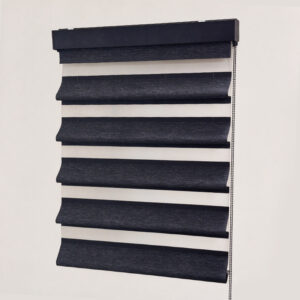
Any blind controlled by a bead chain loop: vertical blinds, roller blinds including the day and night types, zebra blinds, roman blinds with a chain loop, and the corded tracks in the same range.
It does not suit a blind with no loop. A spring-loaded cordless roller such as the no drill roller blinds has no chain to weight, a motorised blind is driven at the headrail, and a wand-tilted vertical blind has a wand in place of a chain. There is nothing to hang a weight on in any of those.
Chain weight or chain tensioner
These are two different parts and they do different jobs, which matters if you are ordering spares for a building rather than for one window.
A blind chain weight travels on the loop. It adds mass, keeps the strands at one spacing and holds the loop vertical, but it does not anchor anything — the loop can still be pulled through it.
A tensioner is fixed to the frame or the wall and holds the loop under spring pressure against a fixed point. That is the part that keeps the lower run short on a blind where the chain hangs where a child can reach it. For that version see the blind chain tensioner page.
On a large fit-out both are usually specified: a weight on every loop, and a tensioner wherever the loop hangs low enough to need anchoring.
Matching the colour
A blind chain weight hangs in the middle of the window at eye level, so it is one of the few blind parts a customer actually looks at. A white weight on a black chain reads as a missing part rather than a spare.
The range runs from white and cream through grey and black to mint, sky blue and tan, so the weight can be matched to the chain, the bracket and the headrail already on the window rather than standing out against them.
For a fit-out it keeps the spares list short: one colour reference across a whole building, and the maintenance team is not matching parts by eye on every call-out.
What to check before ordering
The loop. A bead chain and a cord loop do not sit in a clip the same way — a chain seats between beads, a cord seats on the cord itself. The safe move is a photo of the loop next to a rule before the order goes in.
Whether the loop is already joined. Most loops are joined with a connector and the weight simply clips over the join. A loop that has been spliced or has a repaired link can be too thick for the clip window, and that is worth knowing before a box of them ships.
How low it hangs. The body needs clearance at the bottom of the travel. On a short drop the weight has to sit higher up the loop, which is fine, but it changes where the sprocket sits relative to the chain run.
What these are not
Not a chain connector: a connector joins two chain ends into a loop, and it is usually hidden inside or under the blind chain weight rather than replaced by it. Not a wall-fixed tensioner, for the reason above. And not a cure for a worn sprocket — if the chain is climbing because the teeth are hooked, a weight will hold the loop vertical and the chain will still climb, and the sprocket is the part that needs changing.
For the brackets, runners and track parts that go with the same range, see curtain rod and track accessories. For volume pricing, colours held in stock and samples, send the loop photo through the inquiry form.








 French
 English
 Arabic
 Russian
 Esperanto
Avis
Il n’y a pas encore d’avis.