


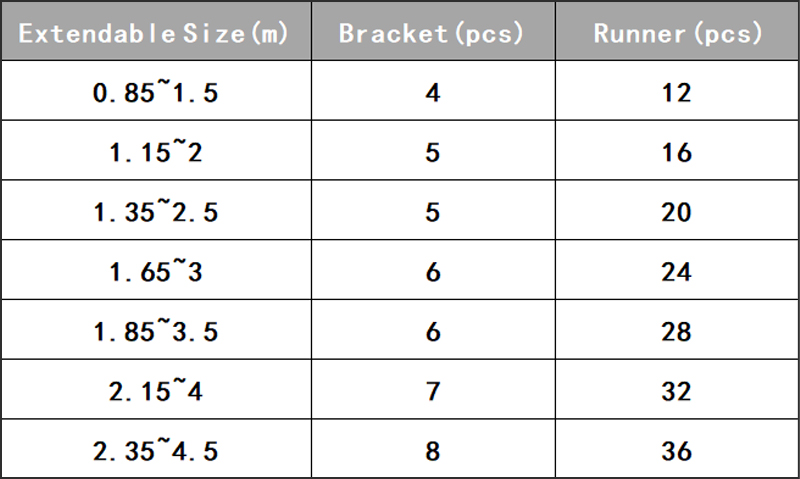
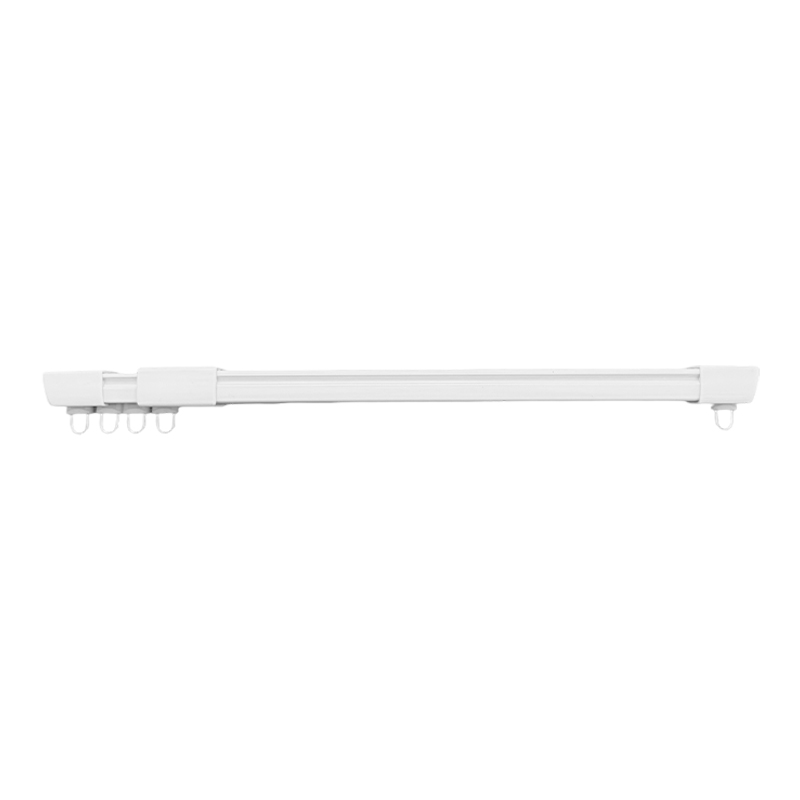


A metal curtain track is the step above the plastic track most windows are fitted with: the same channel and the same runners, but a steel profile instead of a PVC one. This one extends from 0.85 m to 4.5 m across seven bands, so the track is pulled to the wall rather than cut to it.
Two sections run one inside the other and the overlap in the middle takes up the difference. Nothing is cut, nothing is left over as an offcut, and the track can be shortened again for the next window.
R&C supplies it white as standard, with the brackets and runners packed against the length ordered, to distributors and fitters as well as to individual buyers.
Metal rather than plastic
Most curtain tracks sold for a house are PVC, and that is not a criticism. PVC is cheap, it is quiet under the runners, it is light to hold on a ladder and it can be cut with a saw in a minute. For a normal window with a normal curtain it does the job, and it is what most of the market buys.
Where a metal curtain track earns the extra is on two things a plastic profile struggles with: span and time.
Span. A PVC profile is flexible by nature, which is why it is easy to handle and also why it deflects. Over three metres the sag becomes visible, and a track that has bowed does not fail — it just hangs the curtains wrong, bunched at the middle and open at the ends. A steel profile holds its line over the same span, so the curtain gathers evenly along the whole run.
Time. A plastic track in direct sun can yellow over a few years, and a surface that has gone off holds dust in a way it did not when it was new. Metal does not change colour. The trade is weight and finish: a metal track is heavier to install, and its white coating can chip at a knock or a cut edge where plastic would simply scuff.
The usual summary holds up in practice: plastic for a short window and a light curtain, metal for a long straight run and a track that is meant to still be straight in ten years.
Steel, and where the aluminium version fits
This metal curtain track is steel, in the seven bands listed on the size chart. The same idea in aluminium is a separate product in the same category, and for a buyer the first difference that matters is length: the aluminium adjustable track extends to 5.2 m, this one stops at 4.5 m.
So the measurement usually decides it. If 4.5 m covers the window, this track does it. If it does not, the aluminium version is the one that reaches — and the two are not interchangeable parts beyond that, because the profiles, the bracket counts and the runner sets are different products.
Both are white, both extend rather than cut, and both take the same approach to the overlap, so a range holding one of each covers most of what a fitter meets in a week.
What the bracket and runner counts tell you
The counts on the size chart are not padding; they are the thing that decides whether the track stays straight once it is up.
The shortest band, 0.85 m to 1.5 m, is supplied with four brackets and twelve runners. The longest, 2.35 m to 4.5 m, comes with eight brackets and thirty-six runners. In between, the counts step up with the span rather than jumping at the end.
Two things follow from that. The runner spacing stays roughly constant across the range — about one every 125 mm at both ends of it — so a long track gathers a curtain the same way a short one does, and the pleats do not spread out as the track gets longer. And the bracket count rises with the length, which keeps the fixing points from drifting apart on the longer bands.
If you are comparing this against another track, ask for the bracket count at your length before anything else. A track quoted with three brackets at four metres is being quoted as a light track whatever the profile is made of.
The overlap, and how to choose a band
Every extending track has an overlap, and the overlap is the point where the track is least stiff. That is true of this one, and it is the reason the range is split into seven bands rather than one track covering everything.
The rule is to keep your measurement inside the band rather than at the top of it. A 3.9 m opening sits near the end of the 2.15–4 m band, with the least overlap left; the 2.35–4.5 m band reaches the same 3.9 m with more of the sleeve still engaged. The next size up costs very little and buys back the stiffness.
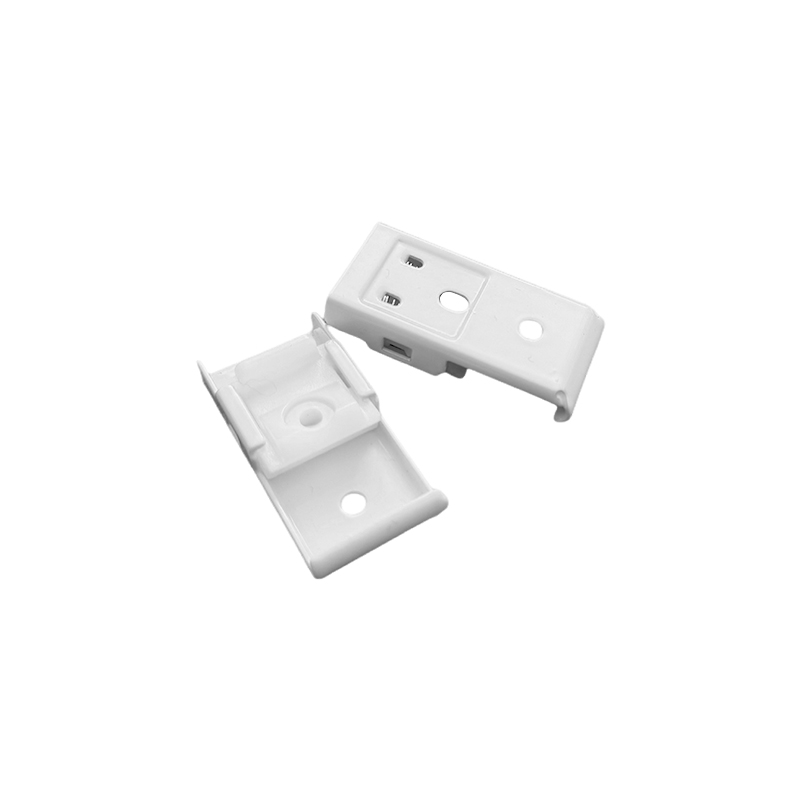
Bracket the joint as well. A bracket set close to where the two sections meet takes the load into the fixing instead of asking the sleeve to carry it.
Where a metal curtain track earns its place
A long straight run. Three to four and a half metres across a wall of glass or a wide opening, where a plastic track would bow and this one does not.
A window that takes the sun. South-facing rooms are where a plastic track ages fastest and where metal keeps its colour.
A rented flat. Fixed with brackets, taken down at the end, and short enough for the next window when it moves.
A shop window or a display. Re-hung to a different width between seasons and never cut to fit one layout.
A room divider. A straight span with a curtain on it, where the track is doing the work of a partition.
What this track is not
It is not a track that bends. A bay, an angled wall or a curve needs a flexible track made to be bent; forcing a steel section with a sliding joint round a corner is not a site job. The flexible aluminium option in the range covers that.
It is not a motorised track. It is operated by hand, and the motorised version of the same idea is a different product.
It does not go past 4.5 m. For a longer opening, the aluminium adjustable track extends to 5.2 m.
Fitting, and what to send with an enquiry
Measure the run, not the glass. The track spans the fixing points, and an overrun past the window at both ends is what stops light at the edges.
Choose the band, then check the fixing. Pick the band that leaves your measurement inside it with room at both ends, then look at the bracket count against what the wall will take — eight brackets are eight holes, and a plasterboard ceiling needs the right plugs for them.
Decide ceiling or wall. The brackets fix upward into a ceiling or soffit, or back to the wall above the window. Which one is possible is decided by the building, and it changes the length you need.
Then send the length, the fixing, the number of curtain layers and the colour of the frame — a metal curtain track is ordered on length and fixing together. With those four, the band, the bracket count and the runner count come straight out of the chart without a second round of questions.
Care
Cleaning a metal curtain track is two jobs: wipe the profile with a dry cloth, and leave the runners dry. Oil in a track channel collects dust until the runners stop sliding freely, and that shows up as a curtain that will not pull closed.
Touch in a chip on the coated steel while it is small. An exposed steel edge will rust, and a rust mark transfers to the curtain heading. Check the brackets near the joint once a year on a track that is pulled every day — the sleeve and the bracket beside it take the wear between them.
Questions buyers ask
Metal or plastic — is it worth the difference?
On a short window with a light curtain, no: a PVC track does the job for less, which is why a metal curtain track is specified for the longer runs and the sunnier windows. On a run of three metres or more, or on a window that faces the sun, it stays straight where plastic deflects, and it does not change colour over time.
What is the longest length?
4.5 m, on the 2.35–4.5 m band. The range starts at 0.85–1.5 m and steps up through five bands in between.
Will it go round a bay window?
No. It is a straight track, and a steel section with a sliding joint should not be bent on site. A bay needs a flexible track, which is a different product in the same range.
Do I have to cut it to length?
No. The track pulls out to the length you need and the overlap takes up the difference, which is why the range is split into seven bands covering everything from 0.85 m to 4.5 m.
Are brackets and runners included?
Yes, and the quantities scale with the length: four brackets and twelve runners on the shortest band, up to eight and thirty-six on the longest. They are packed against the length ordered rather than added afterwards.
Related products
This metal curtain track sits in the curtain tracks and rails range alongside the aluminium adjustable curtain track that extends to 5.2 m, the PVC single curtain track for a short window and a light curtain, and the corded curtain track where the curtain is opened with a pull cord. For a bay or a ceiling curve, the flexible aluminium curtain track bends where this one cannot, the motorised version of the same span is the extendable motorized curtain track, and a sheer plus a drape need the double curtain track. Brackets are also supplied on their own as curtain track brackets, and wholesale or OEM quantities go through the enquiry form.





 French
 English
 Arabic
 Russian
 Esperanto
Avis
Il n’y a pas encore d’avis.